UK AI Compliance 101: A Beginner's Guide to Mastering New GDPR Rules for Your Business
In short
Answer summary for readers and AI search
UK SMEs using AI need clear governance in 2026: DPIAs, explainable decision logic, grounded data, PII masking, audit logs and vendor checks across UK GDPR and any relevant EU AI Act exposure.
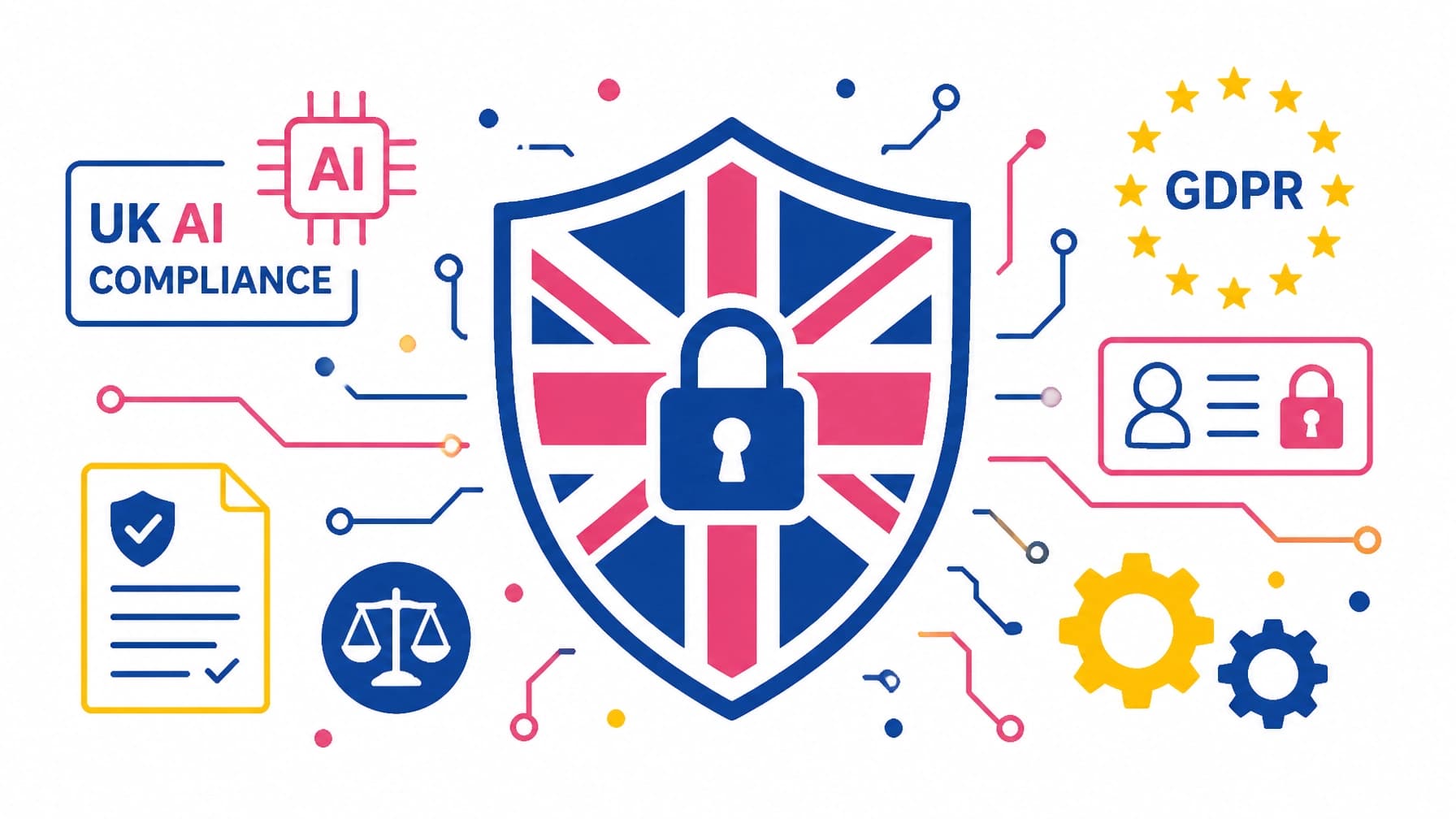
In Short: As we move into mid-2026, the regulatory landscape for Artificial Intelligence in the UK has shifted. While there is no standalone "UK AI Act", the Information Commissioner's Office (ICO) has integrated strict AI-specific expectations into the existing UK GDPR framework. For SMEs in Dorset and across the UK, compliance now requires proactive Data Protection Impact Assessments (DPIAs), technical transparency in AI decision-making, and strict adherence to the EU AI Act for any cross-border operations. Ignoring these obligations creates "regulatory debt", a liability that can halt business growth and lead to fines reaching up to 4% of global turnover.
The Compliance Gap: Why "Business as Usual" Is Now a Liability
For years, many small businesses in Weymouth, Dorchester, and the wider UK treated AI as a "set and forget" tool. You plug in a chatbot, let it handle customer queries, and assume the software provider handles the legalities.
This is a dangerous misconception in 2026.
The primary problem is the "black box" nature of many off-the-shelf AI systems. When an AI tool processes customer data to make a decision, whether it is scoring a lead or responding to a sensitive support ticket, the business is legally responsible for how that decision was reached. Under the latest ICO guidance, "I don't know how the AI works" is no longer a valid defence.
We are seeing a rise in "compliance friction", where local firms are losing contracts because they cannot provide a clear audit trail of their AI's data usage. Whether you are a recruitment firm in Portland or an e-commerce brand in Bournemouth, your AI systems must now be transparent by design, not by accident.
The Solution: A Proactive AI Governance Framework
At Pyxage, we do not just build intelligent AI automation systems; we build them with a privacy-first architecture. Transitioning from a risky "black box" to a compliant "glass box" model requires three critical pillars.
1. The Mandatory DPIA (Data Protection Impact Assessment)
If your AI processes personal data, which almost all AI systems do, a DPIA is no longer optional. It is your primary evidence of accountability. This document must explain why the AI is necessary, the risks to individual rights, and the technical measures you have implemented to mitigate those risks.
2. RAG Pipelines for Data Sovereignty
Instead of feeding your business data into a public, unbounded model, we use RAG (Retrieval-Augmented Generation). This keeps your sensitive business data separate from the AI's training set. The AI references your data to answer questions but never absorbs it, helping you stay in control of your intellectual property (IP).
3. Automated PII Scrubbing
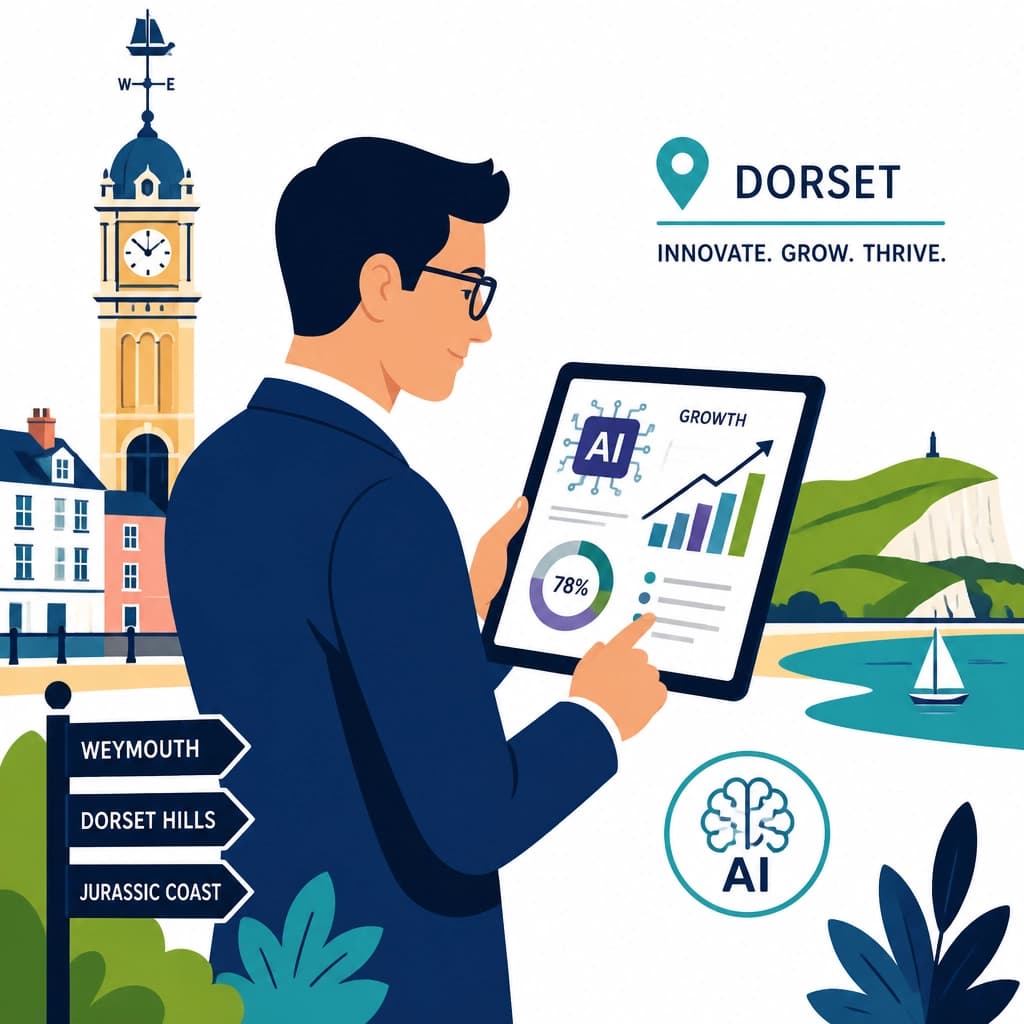
Before any customer data reaches an AI model, it should pass through an automated scrubber. This technical layer identifies and masks Personally Identifiable Information (PII) such as names, addresses, and NI numbers, ensuring the AI only processes the context it needs to function.
Technical Foundation: The Architecture of a Compliant AI Agent
A website is not just a brochure, and an AI agent is not just a script. It is a sophisticated piece of software that requires a robust technical foundation to stay on the right side of the law.
When we deploy AI agents and voice systems for our clients, the architecture follows a rigorous security flow:
- Ingress Layer: Data enters via a secure workflow automation pipeline.
- Semantic Firewall: The system checks the query for jailbreak attempts or sensitive data requests.
- PII Masking Engine: Using Named Entity Recognition (NER), the system swaps real names for tokens, for example "John Smith" becomes "[USER_01]".
- Vector Database: The AI queries a local, encrypted database of your company's verified facts. It does not hallucinate based on public internet data.
- Audit Logger: Every interaction is timestamped and logged in a tamper-proof format, allowing you to prove compliance during an ICO audit.
A compliant AI system is a competitive advantage. It builds trust with your customers and protects your bottom line.
Why Dorset Businesses Must Lead the Way
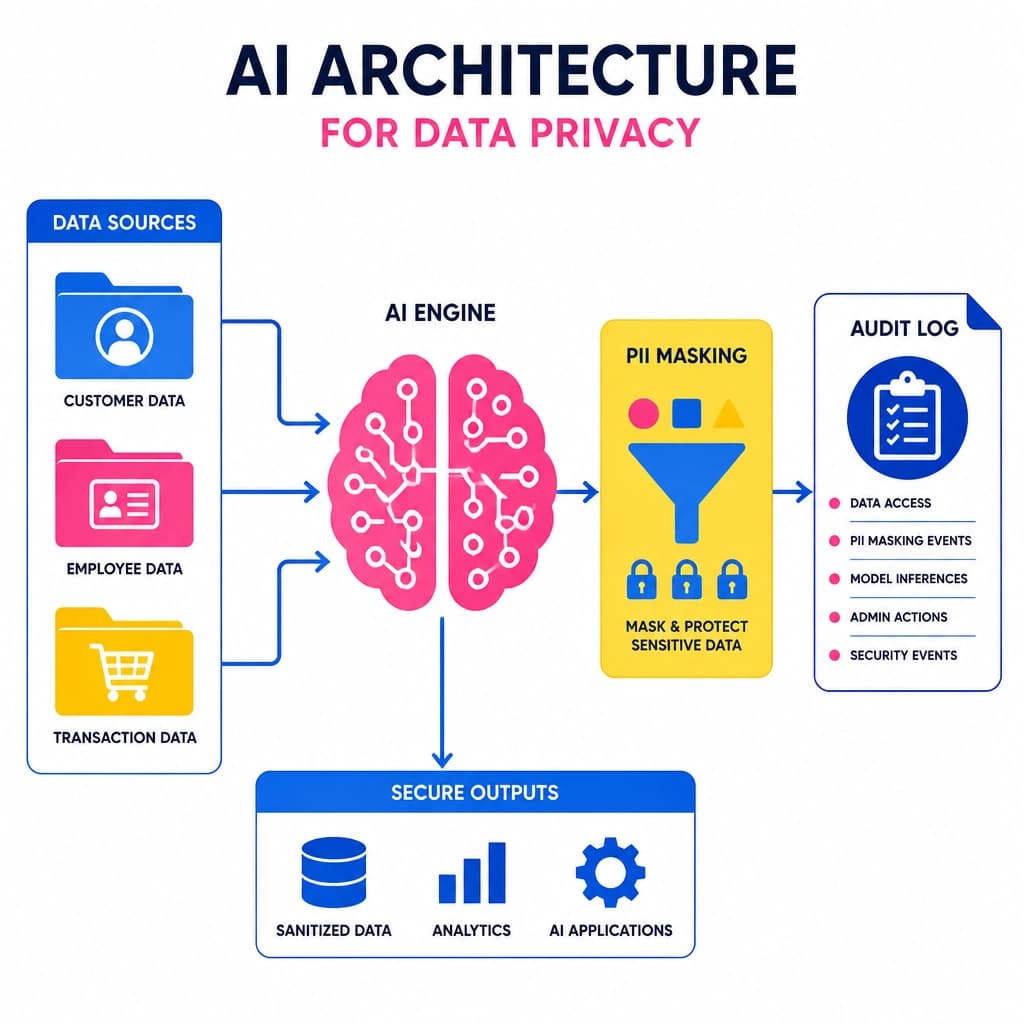
From the independent professional services firms in Dorchester to the tourism-heavy hospitality sector in Weymouth, local businesses are the backbone of the Dorset economy. However, local geography does not exempt you from global rules.
If your e-commerce platform serves a single customer in the EU, you may be subject to the EU AI Act. In 2026, the fines for non-compliance are being enforced more strictly. By implementing local AI solutions built by a team with a UK presence, you ensure that your automation is tailored to local regulations while remaining globally aware.
We work closely with firms in Portland and Dorchester to move them from manual, high-risk processes to automated, high-efficiency systems that save thousands of manual hours.
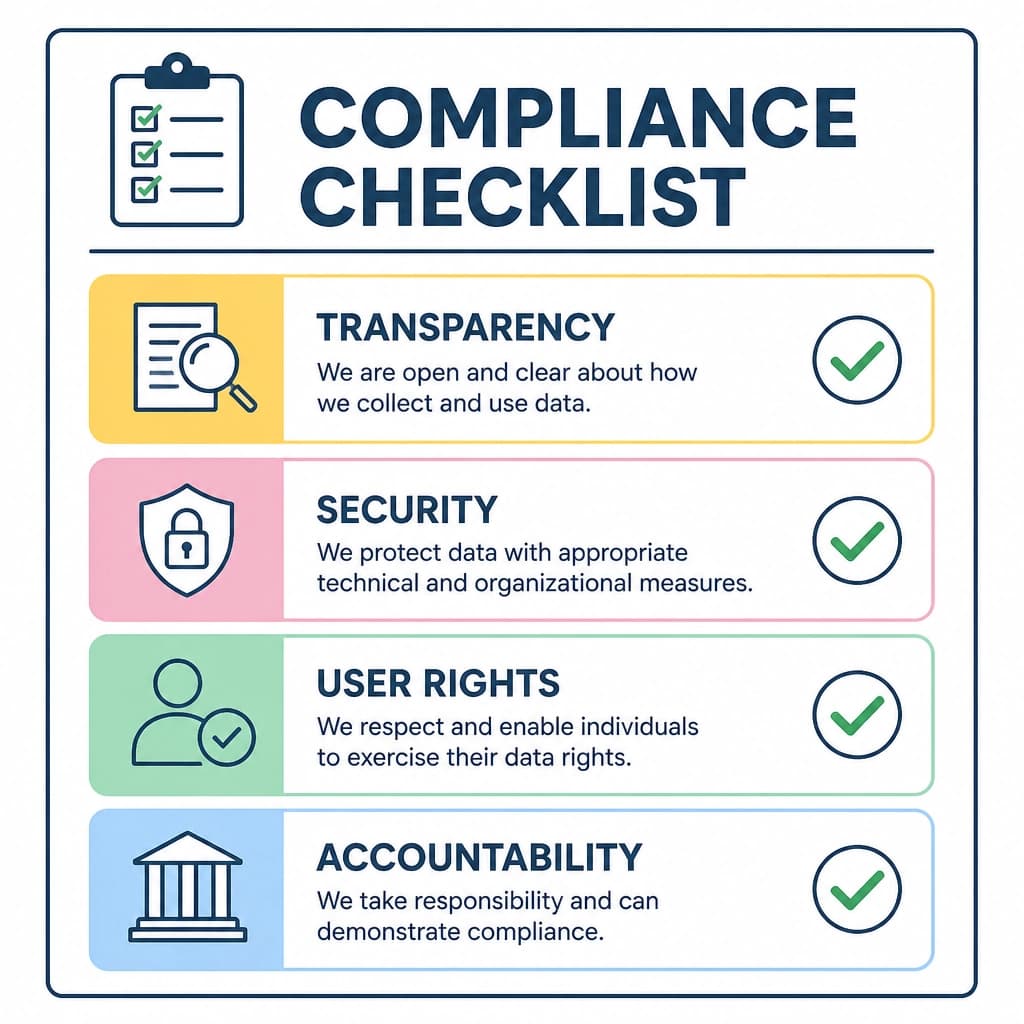
Compliance Checklist for 2026
To ensure your business stays ahead of the curve, follow these direct directives:
- Inventory Your AI: Map every tool that uses machine learning or automated decision-making.
- Assign Accountability: Designate an internal AI lead or DPO to oversee compliance.
- Ground Your Data: Ensure your AI is grounded in verified internal data using RAG pipelines.
- Update Your Privacy Policy: Explicitly state how and why AI is being used in your business processes.
- Audit Your Vendors: Ensure your third-party software providers are UK GDPR compliant.
Frequently Asked Questions
Does the EU AI Act apply to my Weymouth-based business?
Yes, if your AI system produces outputs used within the EU or if you serve EU citizens. It has extraterritorial reach, meaning it applies based on the location of the user, not the business.
What is the biggest risk for SMEs using AI in 2026?
The "right to explanation". Under UK GDPR, individuals have the right to understand how an automated decision was made. If you cannot explain the logic behind your AI's output, you may be in breach of transparency rules.
How do I know if my AI is "high risk"?
Systems used in recruitment, CV screening, credit scoring, or critical infrastructure are generally classified as high risk and require much stricter documentation and human oversight.
Can I use ChatGPT for customer service safely?
Only if it is implemented via an API with a custom wrapper that handles PII masking and data grounding. Using a public consumer AI tool for business data is a high-risk GDPR issue.
Ready to Audit Your AI Strategy?
Navigating the intersection of AI innovation and UK regulation does not have to become a bottleneck for your growth. At Pyxage, we provide a free AI audit to help businesses in Weymouth, Dorchester, and across the UK identify compliance gaps and automation opportunities.
Don't wait for a regulatory inquiry. Build your AI foundation on solid ground today.
Need to audit your AI compliance risk?
Pyxage reviews your AI tools, data flows and automation workflows to identify compliance gaps, reduce regulatory risk and prioritise practical fixes.
View relevant serviceRelated articles
Building Custom AI Agents That Actually Transform Business Operations
Learn how purpose-built AI agents handle support, sales, and internal operations around the clock with measurable ROI.
AI Automation & WorkflowsWorkflow Automation: Building Intelligent Pipelines That Connect Your Entire Business
Learn how end-to-end process automation connects your tools into one seamless, intelligent pipeline that scales.
Local & UK Business AILooking For AI Automation in Dorset? Here Are 10 Things You Should Know
AI automation is now an operational requirement for Dorset businesses. Here are 10 things to know before implementing AI agents, Voice AI, and workflow automation.
Frequently asked questions
Does the EU AI Act apply to a UK business?
It can apply if your AI system produces outputs used in the EU or serves EU users, because the regulation can have extraterritorial reach.
What is the biggest AI compliance risk for SMEs?
The biggest risk is often poor explainability: if a business cannot explain how an automated decision was made, it may breach transparency expectations under UK GDPR.
Can customer-service AI be used safely with personal data?
Yes, but it should use controlled APIs, PII masking, grounded data sources, access controls, logging and clear escalation rules.
Ready to automate?
Book a free AI discovery audit and find out how we can transform your operations.
Book your free consultation